
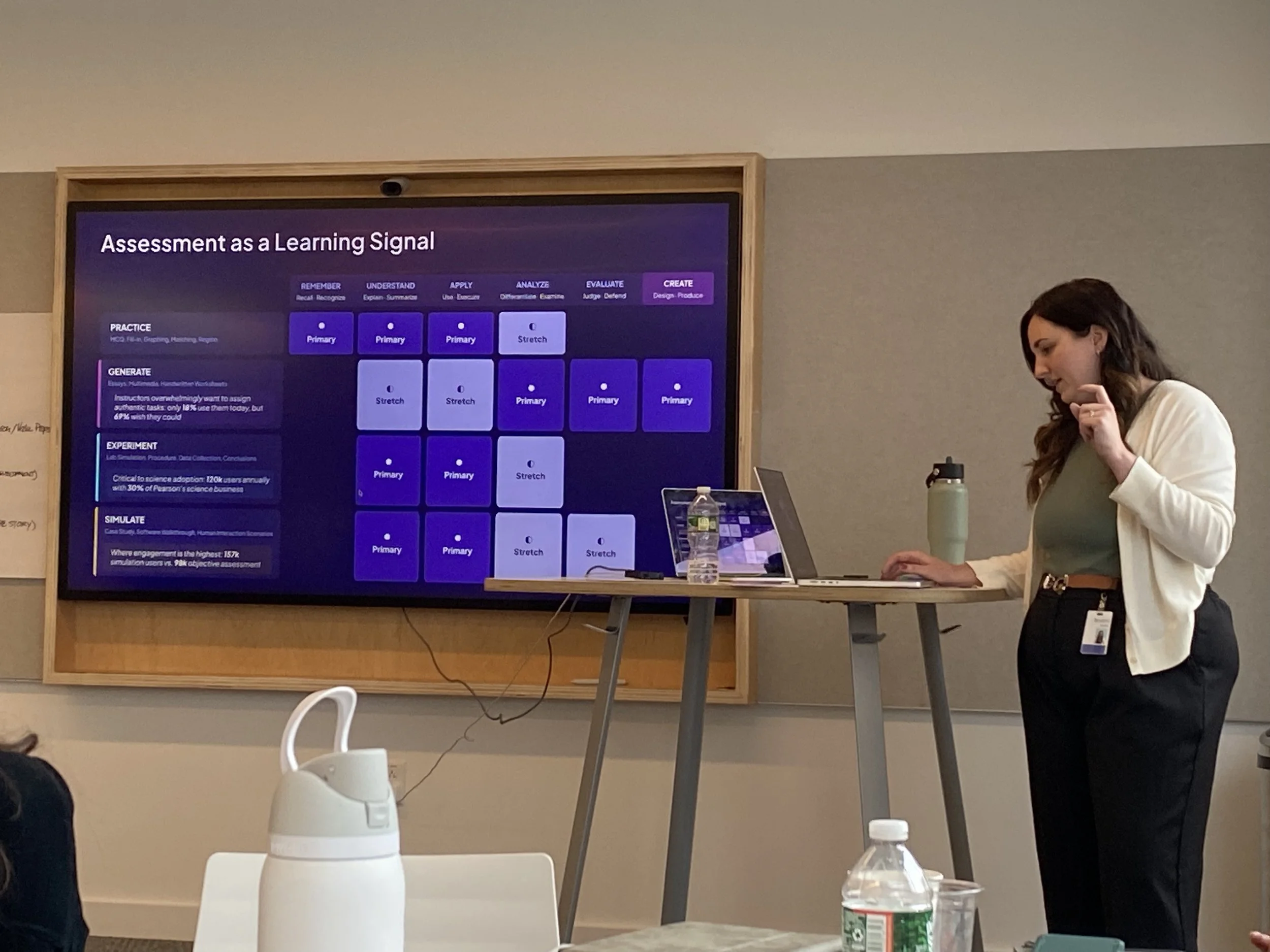
Design Leadership
Building a High-Functioning Design Org Across 13 Teams
TL;DR
Role: Product Design Manager
Collaborators: Cross-functional product and engineering partners
Scope: 13 cross-functional product teams, 3-4 designers, Authoring Platform and Learning Tools
Focus: Transforming team operations, performance, and strategic impact
Impact: Established a scalable operating model across 13 product teams, shifted the team from execution-focused to outcome-driven work, and reduced design cycle time by up to 65%
The Problem
When I took over the team, the problems were structural, not individual.
No shared definition of quality, ownership, or impact
Designers spread thin with no prioritization system
No visibility into capacity across 13 teams
Weak cross-functional alignment
What I Did
I led a two-phase transformation, stabilizing operations first then elevating team capability.
Phase 1: Stabilize
First 90 days
Assessed capacity across 13 teams and reallocated designers to highest-impact work
Implemented a sprint cadence and OKR-driven performance framework
Defined role clarity and quality standards across the team
Phase 2: Elevate
First 180 days
Grew the team from 3 to 4 by hiring a senior designer
Upskilled the team in storytelling, design thinking, and outcome framing
Introduced AI into design workflows to increase speed
Outcomes
50-65% reduction in design cycle time
13 teams, one operating model
75% of design shares outcome-driven
100% of team coached on identified skill gaps
“Bryttni has done a fantastic job adopting the Jira structure for her team by improving stakeholder collaboration, ownership, and the accuracy of tracking and reporting.”
Key Insights
Coaching compounds
Consistent coaching outlasted any process change
Structure before standards
Clarity around expectations came before raising the bar
Prioritization over coverage
Focus on highest-impact work instead of trying to do everything
Design earns strategy
Connecting work to outcomes changed how stakeholders engaged with design