
Product Impact: Driving Adoption in Live Class Engagement
TL;DR
Role: Product Design Manager
Scope: Learning Tools & Assessments, cross-product ecosystem (courseware, onboarding, eCommerce)
Focus: Entry and onboarding into live class engagement tools
Impact: Identified critical adoption blockers across multiple product teams, influenced roadmap alignment across onboarding and courseware experiences
Setting OKRs
The work began when the team set Objectives and Key Results (OKRs) on increasing adoption of live class engagement tools.
We needed to understand how instructors moved through the flow and how difficult the process was. This triggered a UX audit of the entire onboarding experience to identify friction points that could be limiting adoption of the product.
Approach
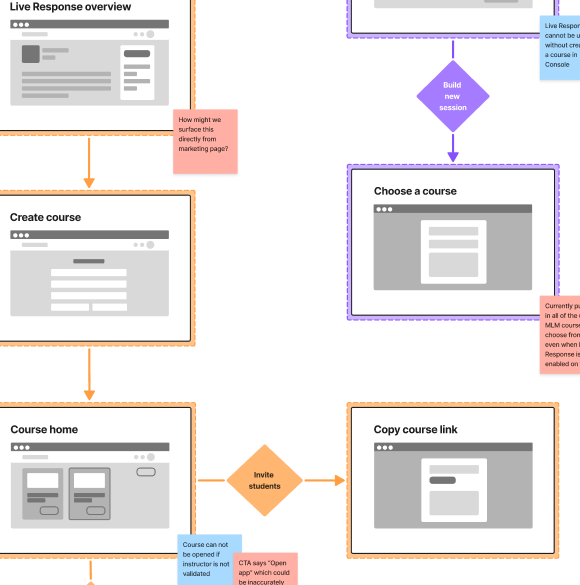
Mapping the Entry Flow
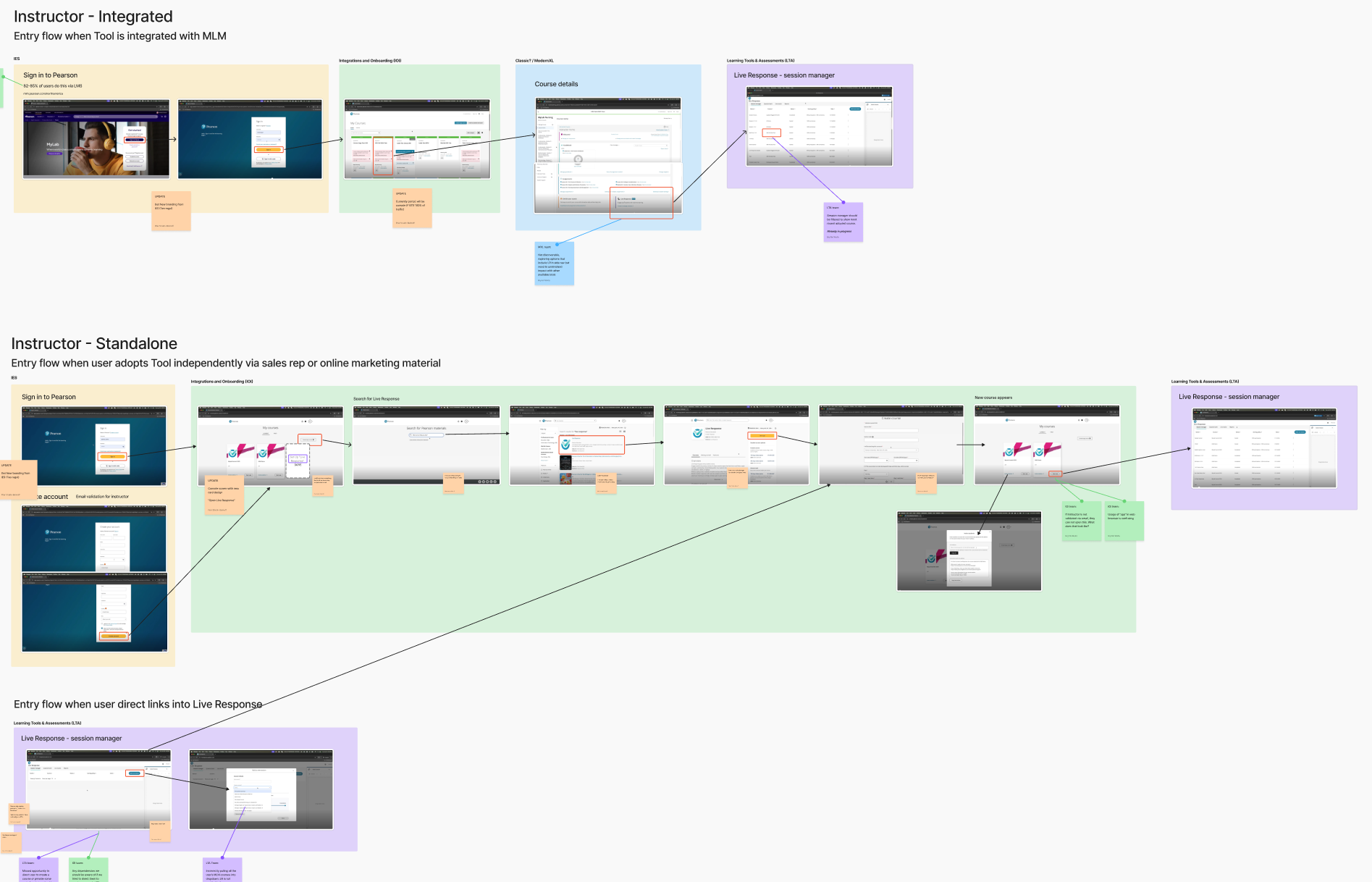
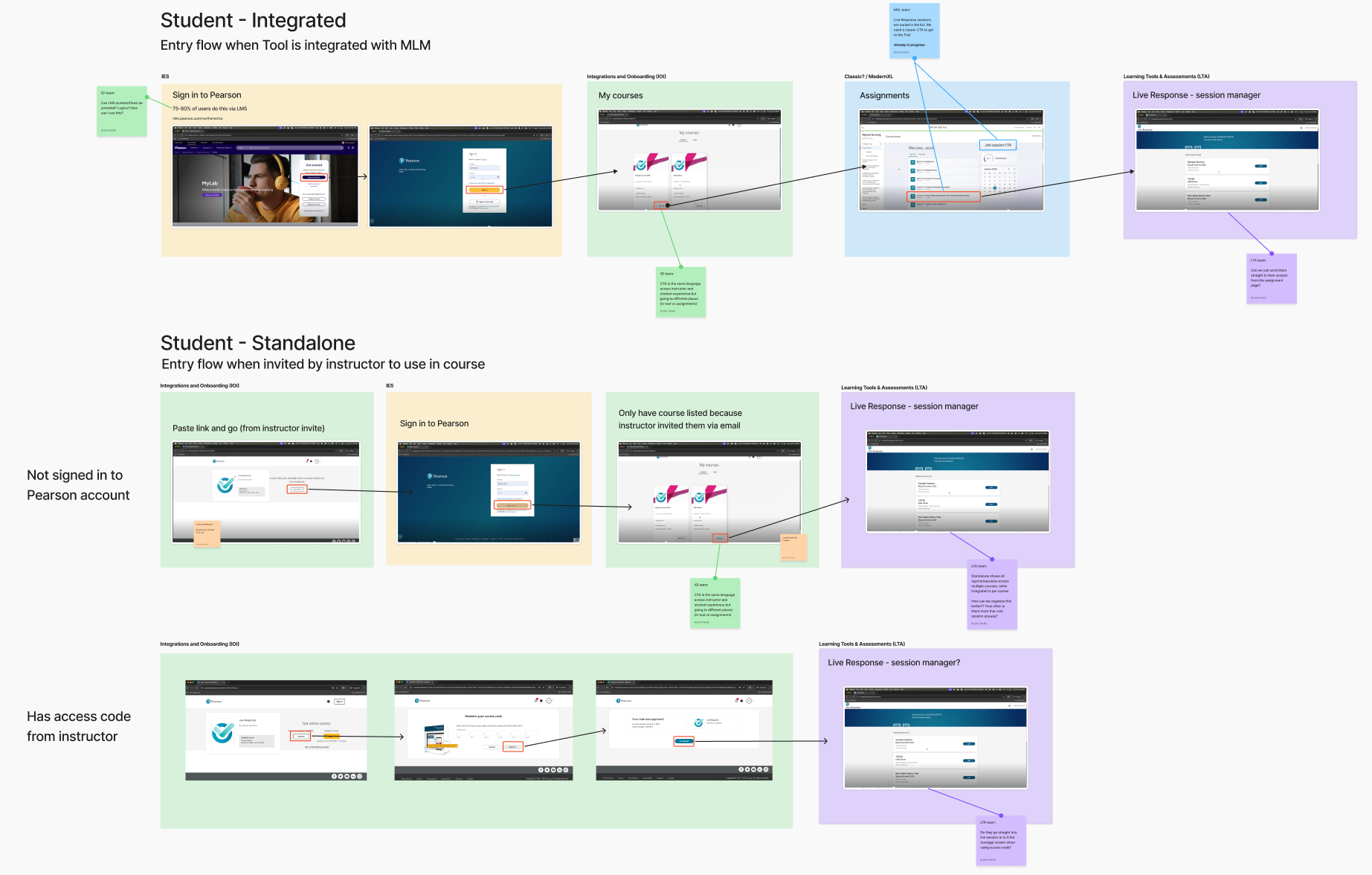
I created a screen-by-screen audit of the instructor and student experience for onboarding into the live class engagement tool. This included entry from integrated courseware, standalone entry without courseware, course creation and setup flows, tool setup, and tool session creation. As the experience was mapped, it was annotated with:
UX opportunities and quick wins
Friction points
Tradeoffs and technical constraints
Cross-team dependencies
Inconsistent terminology and mental model
This allowed us to evaluate the experience from a product and user perspective, identifying where effort was unnecessary, where users were likely to drop off, and where improvements could have the biggest impact on adoption.
The annotated flow became a shared artifact used in conversations with our cross-functional partners to align on priorities and identify quick wins we could tackle together.
Key Findings
The audit revealed several pain points before users even reached the live class engagement tool:
The tool was hidden within another product experience and not discoverable
Instructors were required to create a course even for standalone entry (not integrated into courseware)
Course creation was time consuming and confusing
Terminology in call-to-actions was inconsistent
Multiple entry paths created inconsistent onboarding experiences (we even found a critical bug in production!)
It quickly became clear that entry into the tool was not actually owned by a single team. It spans across several parts of the product ecosystem:
Integration & Enablement Services (IES)
Integrations & Onboarding (IOI)
Higher Ed Courseware
Learning Tools & Assessments
Cross-Team Collaboration
We met with each team to share the audit and to surface friction points and adoption risks. We identified quick wins and opportunities that aligned with their existing roadmaps and OKRs. During these discussions, the IOI team noticed the overlap between their flows with our learning tool setup experience, which led to coordinating regular conversations to remain in sync.
👉 Outcomes
Reduced steps to access the live class engagement tool (from 7 to 4 steps)
Influenced roadmap alignment across 4 product teams
Established shared visibility into end-to-end user journeys
Lessons Learned
I learned that identifying quick wins and “low-hanging fruit” is critical when improvements depend on multiple teams
I learned how UX could help translate business OKRs into product and experience improvements