
Leadership: Elevating UX Through Transformation
TL;DR
Role: Product Design Manager
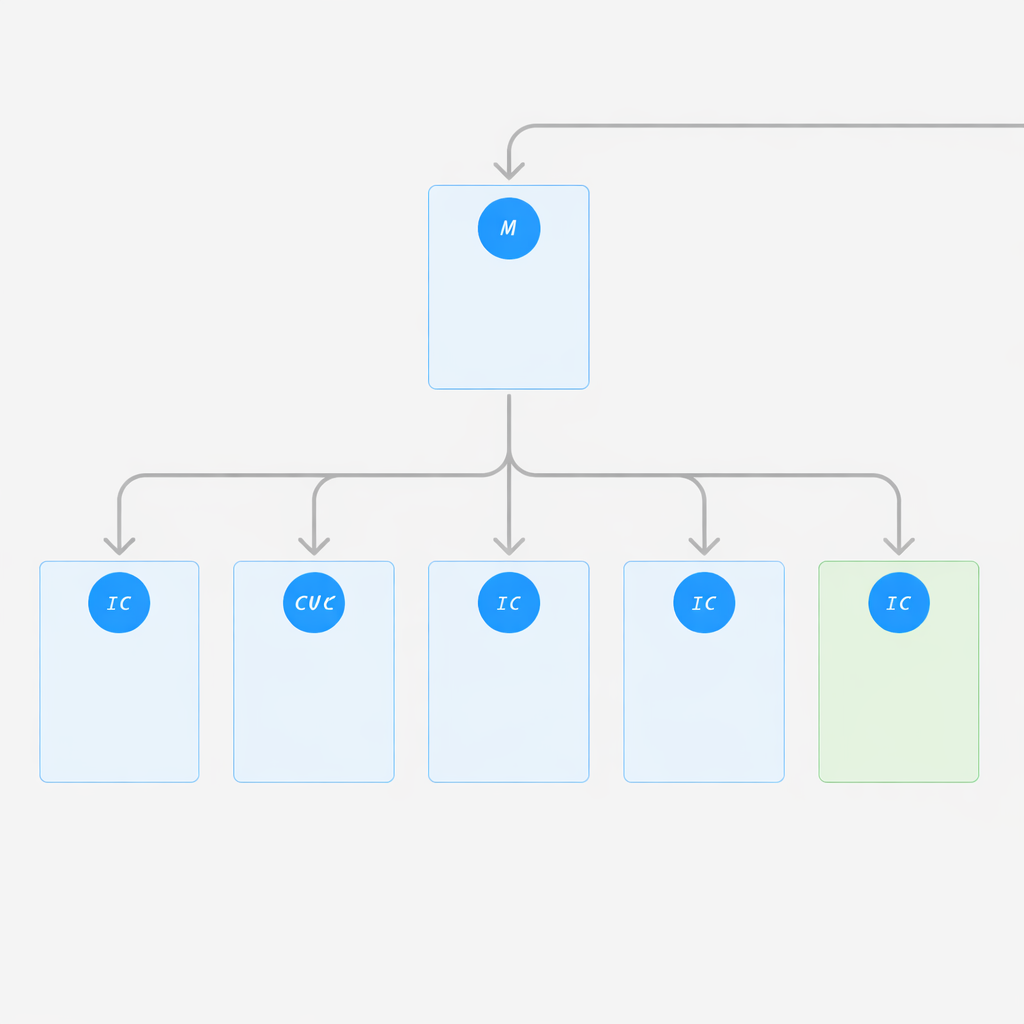
Scope: 13 cross-functional product teams, 3-4 designers, Authoring Platform & Learning Tools
Focus: Transforming team operations, performance, and strategic impact
Impact: Established a scalable operating model to support over a dozen product teams, introduced sprint-based capacity planning, and shifted the team from execution-focused to outcome-driven work
Overview
In March 2025, I transitioned to a new team with a new manager, product space, and organizational structure. The team was operating tactically with inconsistent design quality, unclear performance expectations, and limited strategic alignment with product and engineering.
The team lacked a scalable system for prioritization, capacity planning, and performance. I led a phased transformation by first stabilizing operations, then elevating team capability and impact.
Challenge
No shared definition of quality, ownership, or impact
Work focused on outputs rather than outcomes
Designers spread thin across too many product teams
No visibility into capacity or prioritization
Weak cross-functional alignment
Approach
Phase 1: Stabilize & Operationalize (First 90 days)
How might we create structure, clarity, and focus?
Assessed team capacity across 13 product teams supported by 3 designers
Reallocated designers to high-impact initiatives, reducing burnout and improving effectiveness
Implemented the SVPG product team model (triad/4IAB) to strengthen cross-functional partnership
Established a design sprint cadence to improve prioritization, tracking, and visibility
Defined clear performance expectations and role clarity across the team
Integrated OKRs into goal setting and performance evaluation
👉 Phase 1 Outcomes
Reduced design cycle time by 50-65% (from 4-6 weeks to ≤2 weeks)
Increased UX engagement with product teams to 2-3 touchpoints per week
Established OKR-driven performance (from 0 to 3-5 objectives per designer)
“Bryttni has done a fantastic job adopting the Jira structure for her team by improving stakeholder collaboration, ownership, and the accuracy of tracking and reporting.”
Phase 2: Elevate, Upskill, & Scale (First 180 days)
How might we increase capability, quality, and strategic contribution?
Identified capacity gaps and hired a senior designer (growing the team from 3 to 4)
Upskilled the team in storytelling, design thinking, and solution exploration to improve quality and depth of thinking
Transitioned a visual designer into a UX-focused role to better support product outcomes
Shifted team mindset from execution to ownership, emphasizing accountability and outcomes
Introduced AI into design workflows to increase speed while maintaining quality
👉 Phase 2 Outcomes
Hired and retained a high-performing designer aligned to senior-level expectations (extended to a 12-month contract)
Elevated team capability across core UX skills (100% of team coached on identified gaps)
Shifted from UI-first to outcome-driven design (~75% of design shares prioritized goals over screens)
Lessons Learned
I learned that before raising the performance bar, I needed to create structure and clarity around role expectations. Once that foundation was in place, performance and quality improved more organically.
I learned that capacity challenges were stemming from lack of prioritization. Focusing the team on the highest impact work was more effective than trying to support every product team equally.
I learned that coaching and clear expectations are more effective than process changes alone.
I learned that design becomes more strategic when it is clearly connected to product goals and business outcomes.