
Strategic Vision: The Future of Learning Experiences
TL;DR
Role: Product Design Manager
Scope: Authoring Platform, Learning Tools & Assessments
Focus: Define a strategic vision for how our products support the learning experience, specifically for course creation
Impact: Created a unified vision, provided direction for future course creation and learning tools strategy, established a shared mental model across teams
Goal
After I began managing UX for both the Authoring Platform and Learning Tools & Assessments product teams, I realized we were building strong individual tools but the end-to-end learning experience still had gaps.
The reality for instructors today:
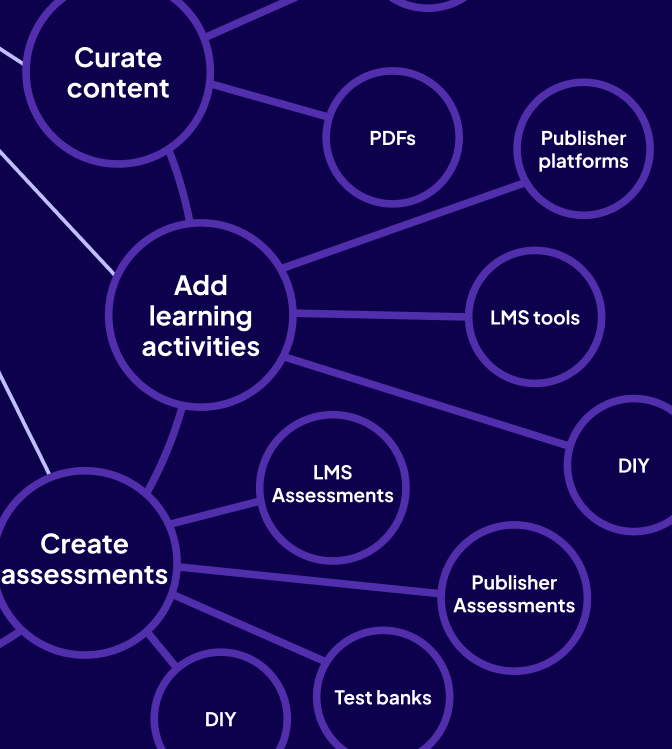
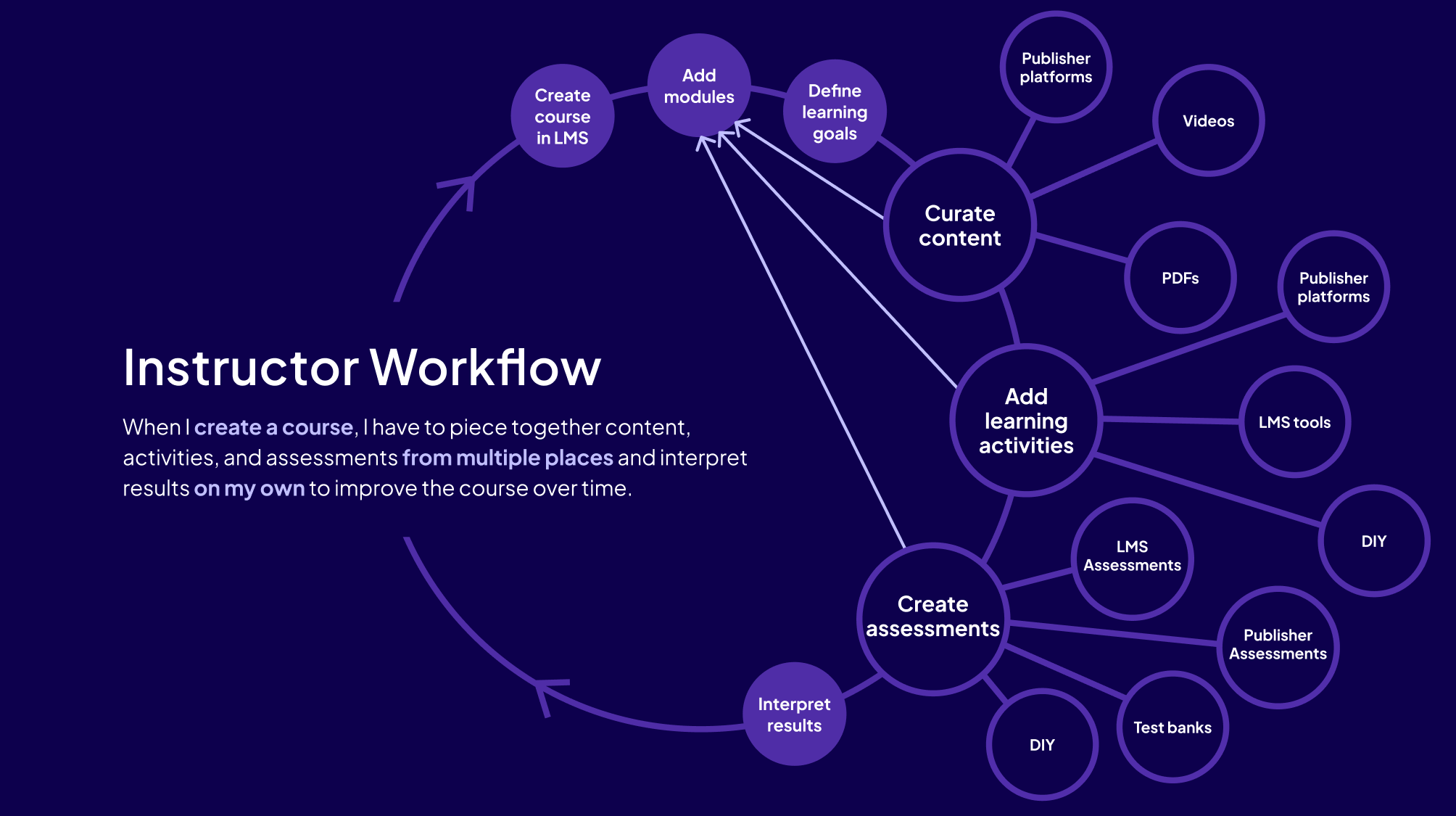
Forced to piece together content, activities, and assessments from multiple places
Assemble courses manually in their learning management system
Workflow is fragmented and does not align to their mental model for teaching
This created a gap between:
What instructors are trying to do (teach and guide learning)
What our products are designed to do (deliver tools and content)
The goal is to define a clear vision for how our products should support the learning experience
Vision
The Reality: Instructors Piece Together Learning
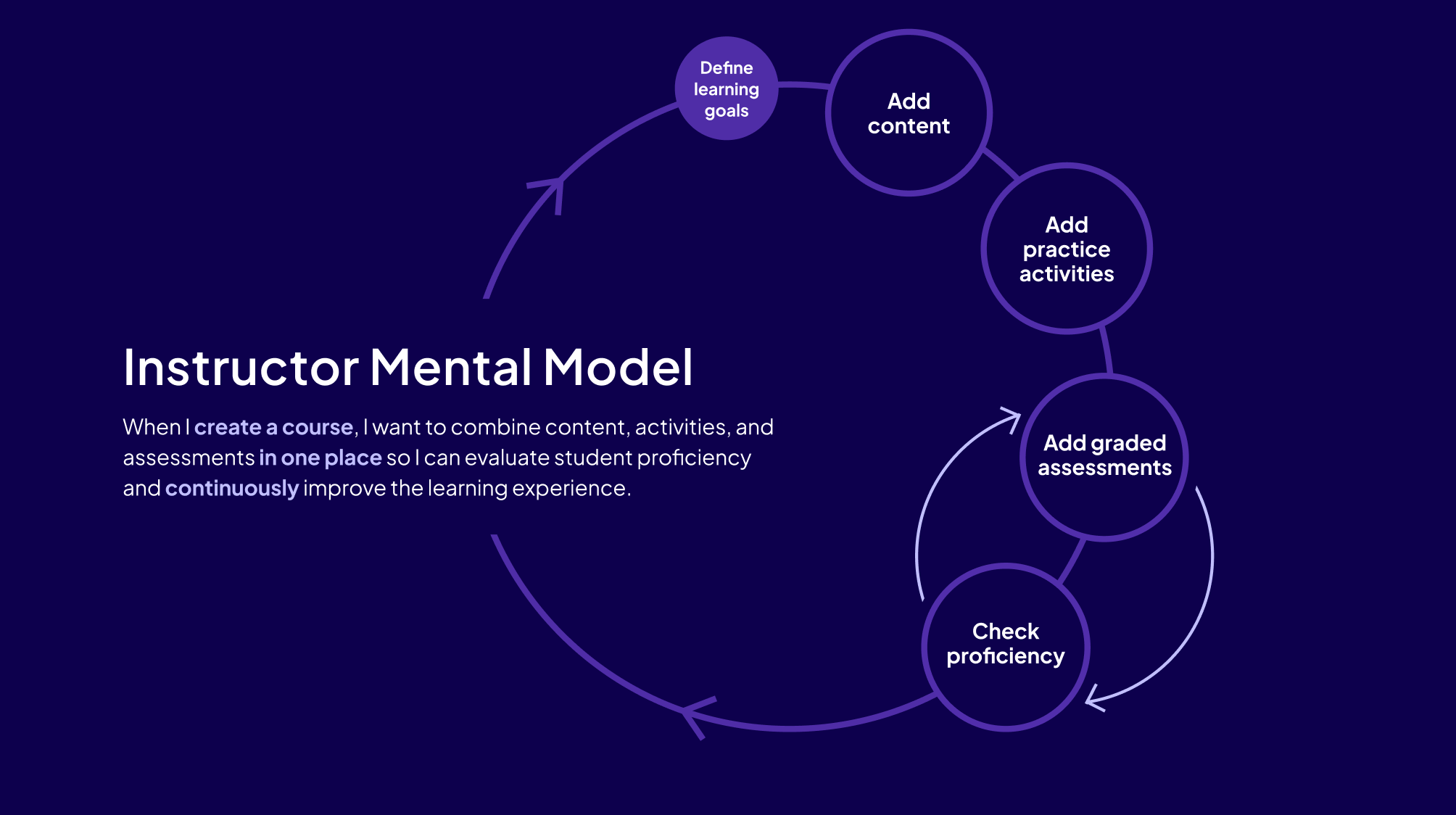
The foundation for the vision was the instructor mental model for teaching a course – create the course, curate content, check understanding, and improve the course ahead of the next semester. I mapped the current instructor workflow against this model to identify gaps and pain points.
The Problem: Pedagogy Isn’t Built into the Experience
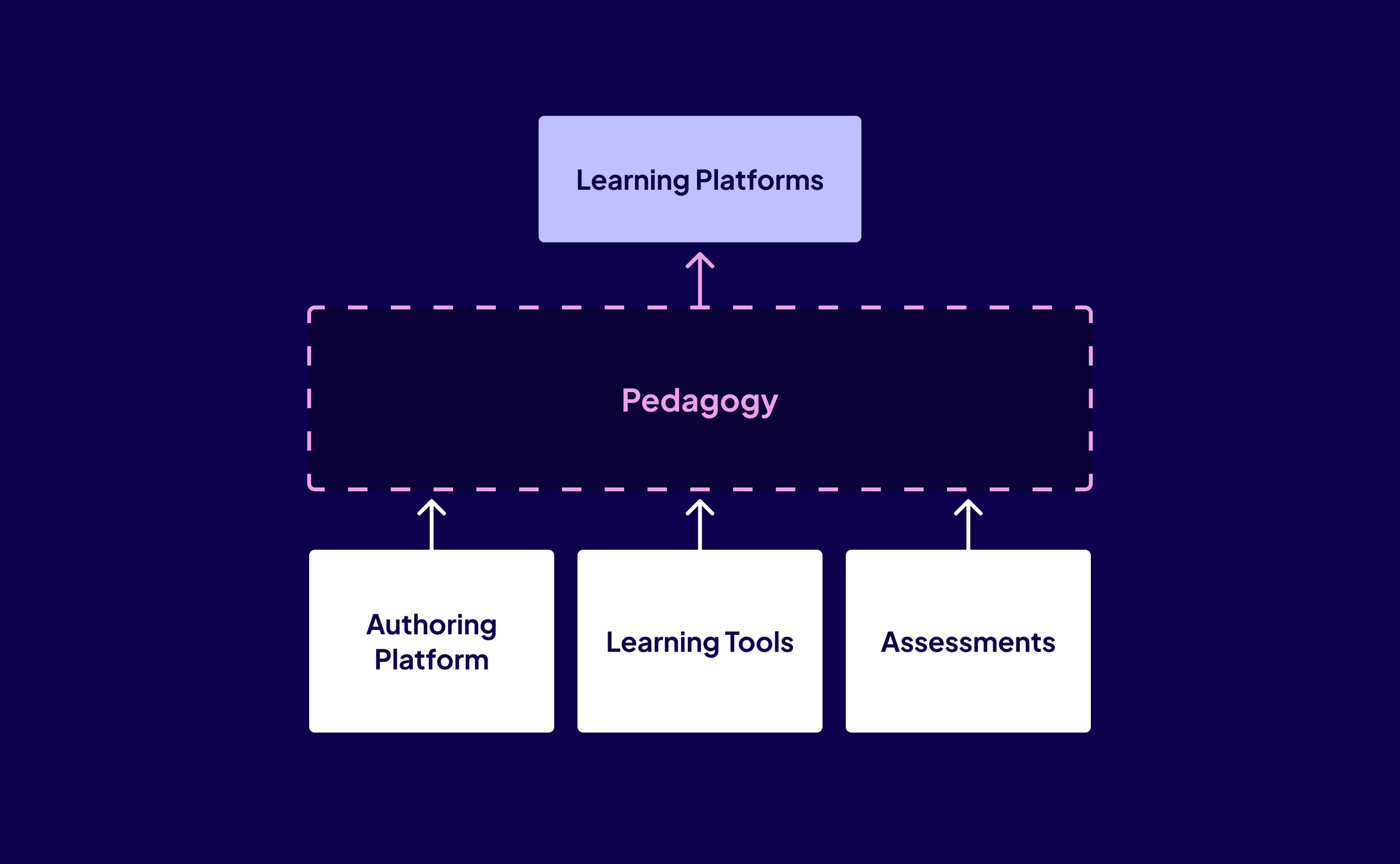
As I mapped the instructor workflow and compared it to the ideal teaching mental model, a clear gap emerged. Content and tools existed but they were not connected by a consistent pedagogical layer.
The Missing Layer
Instructors must translate pedagogy into the experience on their own
Learning design varies widely across courses
Effective teaching requires significant time and effort
The Opportunity: From Assembly to Guided Learning
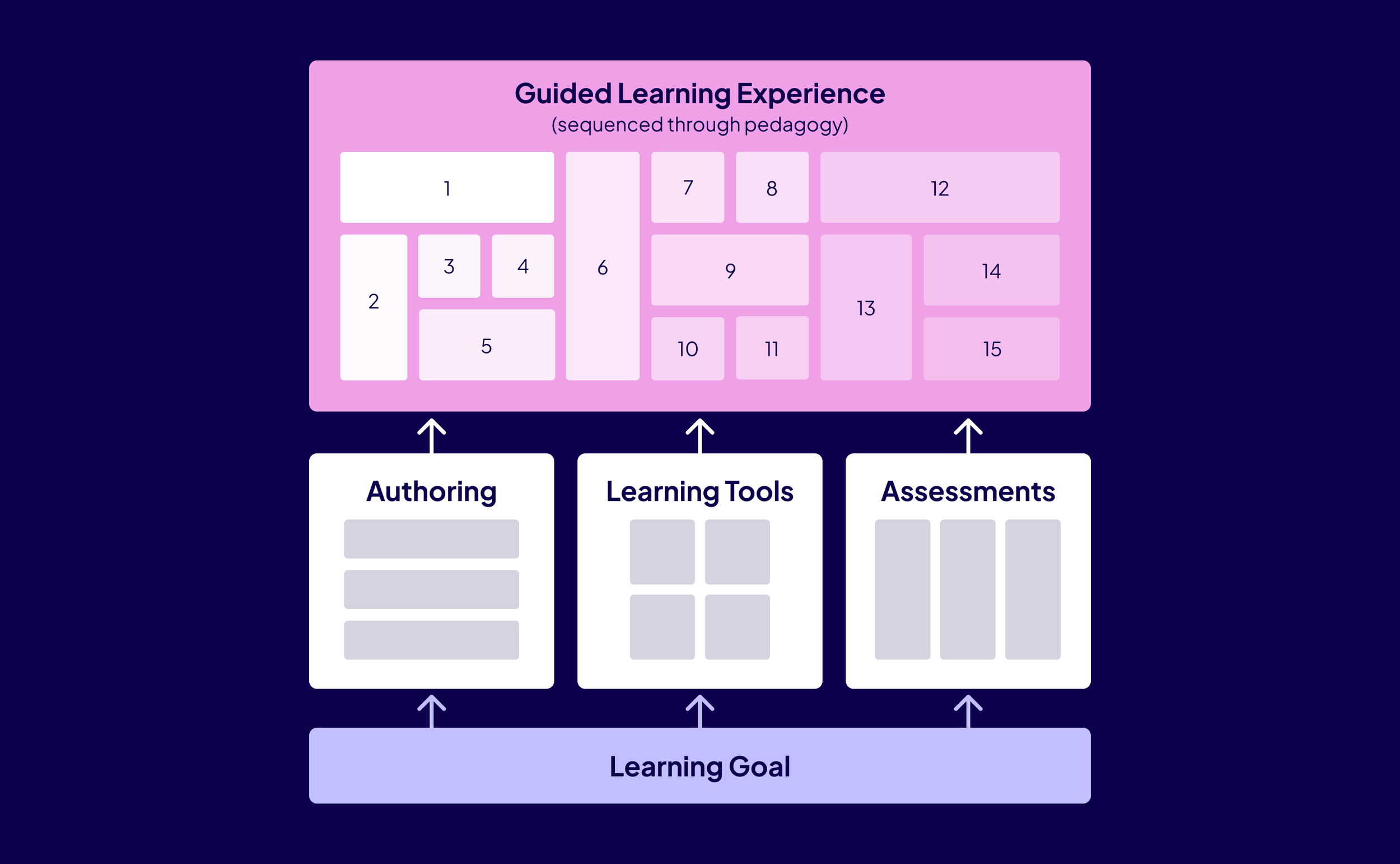
To address this gap, the vision starts with the instructor’s learning goal. Pedagogy then sequences content, tools, and assessments into a guided learning experience with built-in checks for proficiency.
Give us the learning goal. We’ll apply the pedagogy.
Intentionally sequenced to guide learning
Aligned to instructor-defined learning goals
Built-in checks for proficiency and adaptive learning
Pedagogical Layer
To make the vision more tangible, I outlined how the pedagogical layer connects content, learning tools, and assessments at the topic level to guide the learning experience.
Pedagogical Model
Learning goals are broken into topics
Each topic is structured with content, practice, and assessments
Authoring Platform
Aligns content to learning goals across topics
Defines sequencing and scaffolding across topics
Learning Tools & Assessments
Recommends learning activities per topic based on the learning goal
Selects appropriate tools for practice and interaction
Measures proficiency through formative and summative assessments
Enables adaptation based on student performance
The Value: Better Learning, Stronger Business
Customer & Business Gain
Embedding pedagogy drives better learning and business outcomes.
More effective, structured learning experiences
Real-time insight into student proficiency
Reduced time to design effective learning experiences
Scalable pedagogy across products and courses
Increased adoption, retention, and product differentiation
👉 Outcomes
Established a shared instructor mental model for course creation
Aligned multiple product teams around a unified learning experience framework
Enabled design team to run UX audits that identified tool-level improvements aligned to the broader vision
👉 Next Steps
Present the vision to stakeholders to get alignment and buy-in
Share the vision at an onsite with courseware leadership and senior executives
Use the model to help guide roadmap and platform decisions